If you are thinking about building or reimagining an estate in West Buttermilk, the opportunity is exciting, but the path is rarely simple. In this part of Pitkin County, land, privacy, views, and ski-area proximity can create extraordinary long-term value, yet those same qualities also shape what you can realistically design and approve. This guide will help you understand the property logic, approval framework, and diligence points that matter most before you commit capital. Let’s dive in.
Why West Buttermilk stands apart
West Buttermilk sits west of Aspen in a rural Aspen-area setting near Buttermilk Ski Area, with access off Highway 82. County planning materials describe the area as a landscape of large tracts, former ranch land, and higher-end residential neighborhoods. In practical terms, you are not usually evaluating an in-town building lot here. You are evaluating a substantial piece of ground and how well a home and site plan can fit it.
Most West Buttermilk land has been identified by Pitkin County as AR-10 zoning, which is intended for small-scale agricultural activity and large-lot residential development that preserves rural character. That matters because the area’s value is often tied to scale, visual calm, and how a residence sits within the land rather than how much density you can create. For many buyers and owners, the estate question starts with stewardship of the site as much as the architecture itself.
Estate planning starts with the land
West Buttermilk’s public record reflects estate-scale parcels. Recent county actions have referenced tracts of 36.52 acres, 48.8 acres, and a 37-acre parcel at 501 West Buttermilk. That pattern tells you something important: site planning here is usually about shaping a legacy property on multi-acre land, not maximizing a compact footprint.
This has direct implications for design and investment strategy. A larger parcel can create more flexibility around orientation, privacy, approach, and landscape composition. At the same time, larger landholdings often come with more moving parts, including access, drainage, activity envelopes, and scenic constraints that need to be studied early.
Think in terms of buildability
In West Buttermilk, buildability can have as much impact on value as headline square footage. Before you make assumptions about what can be expanded, replaced, or newly built, you need to understand the recorded plat, prior approvals, and any existing building or activity envelopes. You also want clarity on zoning overlays, covenants, conservation easements, road obligations, water service, and whether earlier approvals already set limits on height or floor area.
For a buyer, this is where disciplined diligence protects capital. For an owner, it is where a thoughtful repositioning plan can identify the most efficient path to value creation.
Views, topography, and visual quiet
One of West Buttermilk’s strongest draws is the setting itself, but that setting also drives the county’s design logic. The West of Maroon Creek master plan describes the Buttermilk and Inn at Aspen activity node as generally flat from Highway 82 to the base of the Buttermilk ski slope, where the grade steepens. That means your parcel’s specific topography can significantly affect driveway design, massing, sightlines, and engineering.
County guidance also emphasizes development that complements the natural environment as viewed from Highway 82. The plan calls for ridgelines to remain unobstructed, for structures to be lowered into the ground where possible, for utilities to be buried, and for landscaping to use native species in natural planting patterns. It also identifies a 200-foot corridor setback unless earlier approvals vary it.
Scenic protections are not optional details
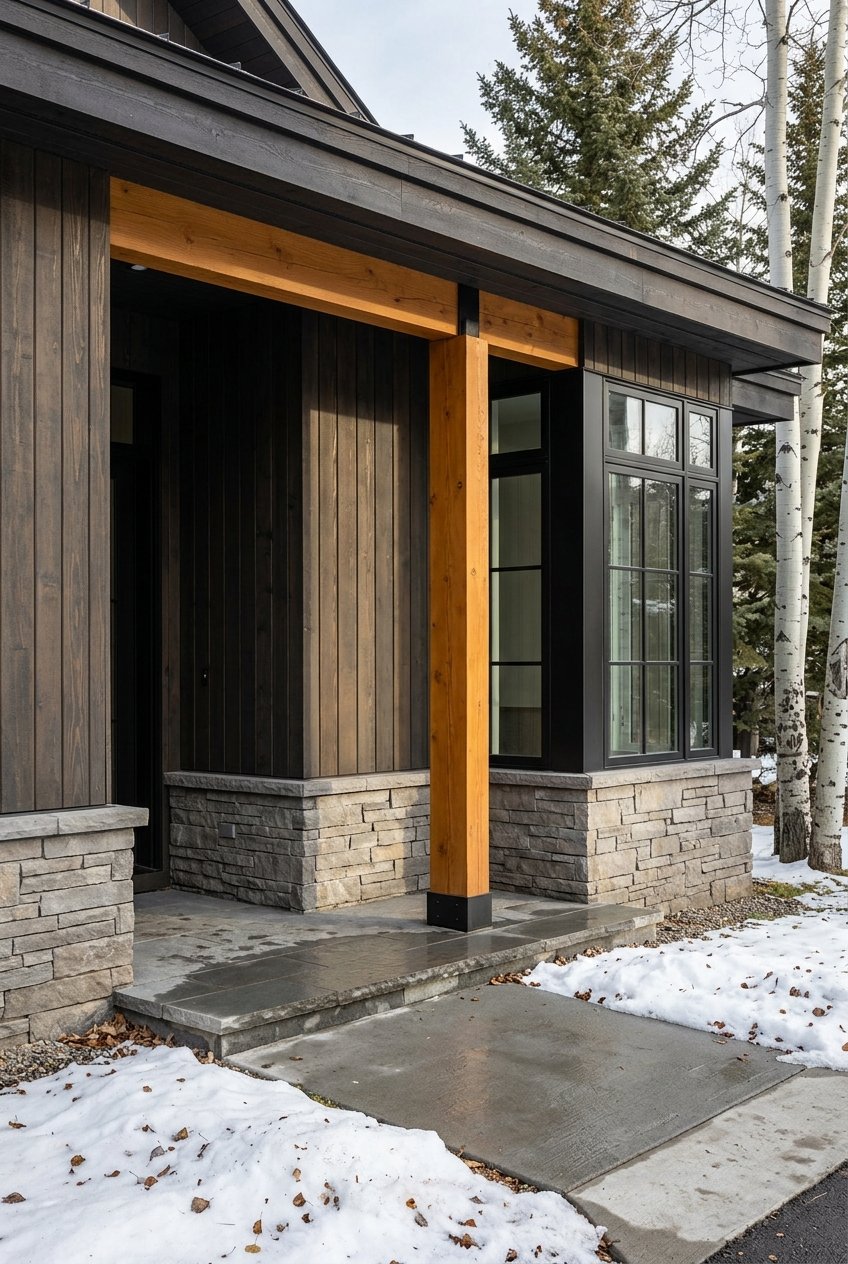
Recent approvals in West Buttermilk have imposed scenic protections that include earth-tone, non-reflective exterior materials and no ridgeline projection. These are not cosmetic afterthoughts. They are part of the regulatory framework that can shape architecture from the beginning.
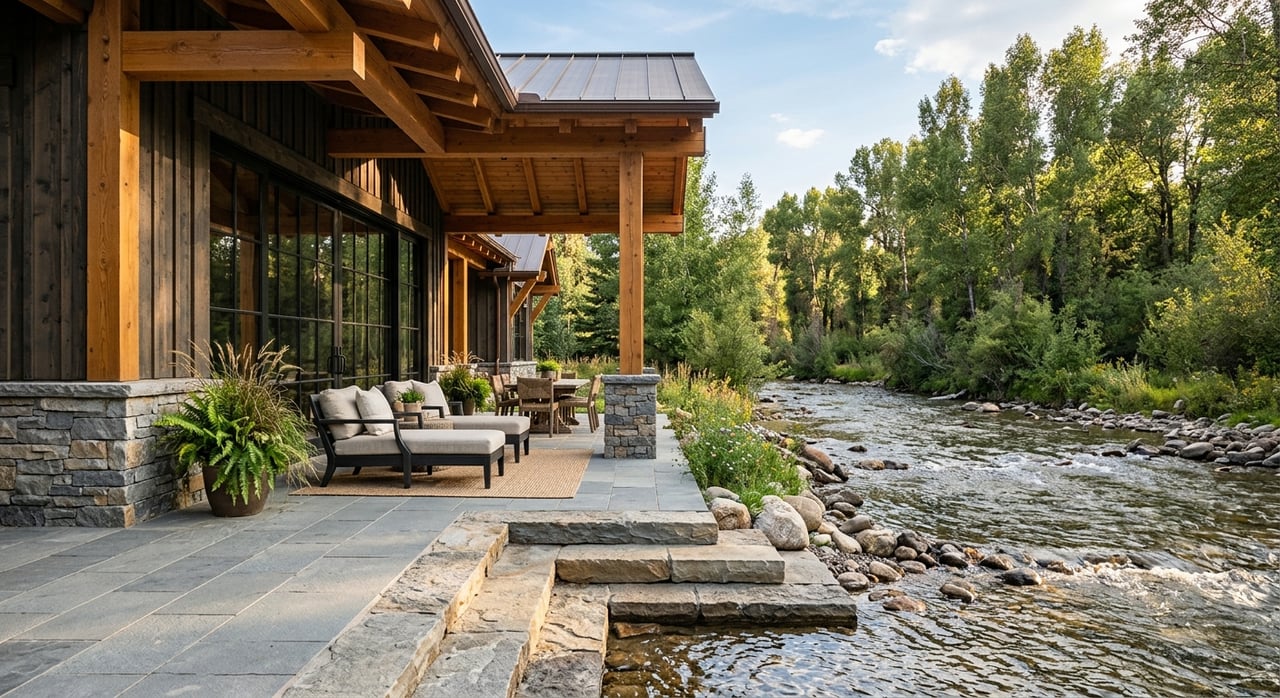
If you are reimagining an estate, this means the best design work often starts by asking how the home can feel powerful without appearing intrusive. In this setting, a successful result is often one that captures views and presence while still reading as quiet within the landscape.
Ski proximity adds value differently here
Buttermilk is known for beginner terrain, terrain parks, uphilling, and X Games Aspen. Proximity to that ski area can be a meaningful part of West Buttermilk’s appeal, even when a property is not ski-in, ski-out in the traditional sense. For many estates, the value lies in quick access and a strong mountain setting rather than direct slope access.
That said, ski-area adjacency should be evaluated practically. The site’s topography, driveway alignment, and building placement all influence how well an estate can take advantage of the nearby ski environment. In other words, “close to Buttermilk” is most valuable when the parcel’s physical conditions support smooth arrival, privacy, and a well-composed orientation.
The county approval process can be layered
In unincorporated Pitkin County, major estate work may involve much more than a building permit. The county’s land-use framework includes pre-application conferences, site plan review, activity envelope review, subdivision review, PUD review, and public notice. PUD approval is typically considered together with a subdivision or site plan, and those processes require noticed public hearings with mailed and posted notice.
For a substantial new build or major reconfiguration, you should expect a process that involves multiple consultants and technical workstreams. That can include land-use planning, surveying, architecture, civil engineering, landscape design, and specialized environmental or wildfire analysis depending on the site.
Recent approvals show the level of detail
A 2024 county resolution for the West Buttermilk Pfister Tracts illustrates how layered these projects can become. The county approved subdivision of two tracts into six lots, a PUD overlay, and activity envelope review. The approval also included conditions tied to scenic protection, height, non-reflective materials, no ridgeline projection, proof of water supply, drainage and erosion control, access permits, and wildfire documentation.
Not every project will require that same mix of approvals. Still, the example is useful because it shows how major estate work in West Buttermilk often requires a coordinated strategy rather than a one-step application.
Wildfire resilience now belongs upfront
Pitkin County adopted its Wildfire Resiliency Code and state wildfire hazard mapping on March 25, 2026. The county says the code applies to building permit applications submitted on or after May 2, 2026. For anyone planning a current or near-term estate project, that means wildfire resilience needs to be part of early design, budgeting, and scheduling.
The county’s land-use application manual also says that when moderate or severe wildfire hazard is present, an application must include a wildfire hazard analysis and mitigation report. It also requires a preliminary drainage study and, when relevant, stream, wetland, or riparian setback analysis.
Separate reviews can affect your timeline
Pitkin County notes that building permits are only part of the picture. Access permits, earthmoving permits, tree removal permits, and exterior lighting can trigger separate review. If you are budgeting time for a build or major renovation, this is one reason schedules need to be grounded in the actual county pathway for the site.
A smooth process often depends on sequencing. The more clearly your team understands permits, reports, and agency touchpoints upfront, the less likely you are to lose momentum later.
Variances are a narrow tool
It can be tempting to treat a variance as a backup plan when a concept stretches beyond current constraints. In Pitkin County, that is not how the process is designed. The Board of Adjustment may approve a variance only when unusual narrowness, shallowness, shape, or topographic conditions create peculiar practical difficulties or undue hardship, and only if the relief will not harm the public good or undermine the county plan and code.
In other words, a variance should be viewed as a limited remedy for unusual site conditions, not as a standard strategy for estate planning. If your concept depends on one, that should raise the level of diligence, not reduce it.
Return on capital often comes from existing rights
In West Buttermilk, the smartest capital strategy is not always the most aggressive one. Pitkin County notes that allowable floor area can depend on zone district, caucus area, UGB location, prior approvals, and PUD or other development agreements. The county also identifies GMQS and TDRs as tools that manage growth.
The West of Maroon Creek planning materials say established subdivisions and residential subdivisions accessing from West Buttermilk Road should generally develop based on existing entitlements, with only limited changes anticipated over the planning horizon. For buyers and owners, that points to a practical conclusion: the strongest projects often make disciplined use of existing rights and site advantages instead of relying on speculative entitlement expansion.
What sophisticated diligence looks like
Before you build, renovate, or reposition an estate, focus on the items most likely to affect value and timing:
- Recorded plat and any amendments
- Existing building envelopes or activity envelopes
- Current zone district and applicable overlays
- Prior approvals that may set height or floor-area limits
- Conservation easements, covenants, or similar restrictions
- Water and road service obligations
- Access and drainage constraints
- Scenic-view and ridgeline protections
- Wildfire-related documentation requirements
County materials also show that service can be district-based and site-specific in this area. Older county reporting describes district water and road service in the neighborhood, while the 2024 West Buttermilk approval reflected a mix of district hydrants, wells, and storage tanks. That is one more reason each parcel should be evaluated on its own facts.
Reimagining an estate takes more than design taste
In a market like West Buttermilk, architecture matters, but execution matters just as much. A compelling estate project balances land, regulation, infrastructure, and long-term ownership goals. The strongest outcomes usually come from understanding where the property has genuine flexibility and where the county framework is likely to stay firm.
If you are considering a purchase, a teardown, a major remodel, or a ground-up legacy estate in West Buttermilk, the key is to look beyond the romance of the parcel and into the mechanics that support value. That is where rigorous local guidance can make a meaningful difference. If you want a discreet, finance-forward perspective on land, estate repositioning, or entitlement-sensitive opportunities in the Aspen market, request a confidential consultation with Lex Tarumianz Realty.
FAQs
What makes West Buttermilk different from other Aspen-area estate locations?
- West Buttermilk is defined by large tracts, rural character, proximity to Buttermilk Ski Area, and a planning framework that emphasizes low-density development, scenic protection, and site-sensitive design.
What zoning is common for West Buttermilk properties?
- County materials identify most West Buttermilk land as AR-10, a district intended for small-scale agricultural activity and large-lot residential development that preserves rural character.
What approvals might a West Buttermilk estate project require?
- Depending on the property and scope, the county process can involve pre-application conferences, site plan review, activity envelope review, subdivision review, PUD review, public notice, and separate permit reviews tied to access, earthmoving, tree removal, lighting, and building.
What should buyers review before purchasing land in West Buttermilk?
- Buyers should review the recorded plat, prior approvals, building or activity envelopes, zoning and overlays, conservation easements or covenants, water and road obligations, drainage and access constraints, and any scenic, ridgeline, height, or floor-area limits.
How does wildfire review affect West Buttermilk construction?
- Pitkin County’s Wildfire Resiliency Code applies to building permit applications submitted on or after May 2, 2026, and sites with moderate or severe wildfire hazard may require a wildfire hazard analysis and mitigation report as part of the application process.
Are variances commonly used to expand estate potential in West Buttermilk?
- Variances are a narrow remedy in Pitkin County and may be approved only when unusual site conditions create practical difficulties or undue hardship without undermining the county plan and code.