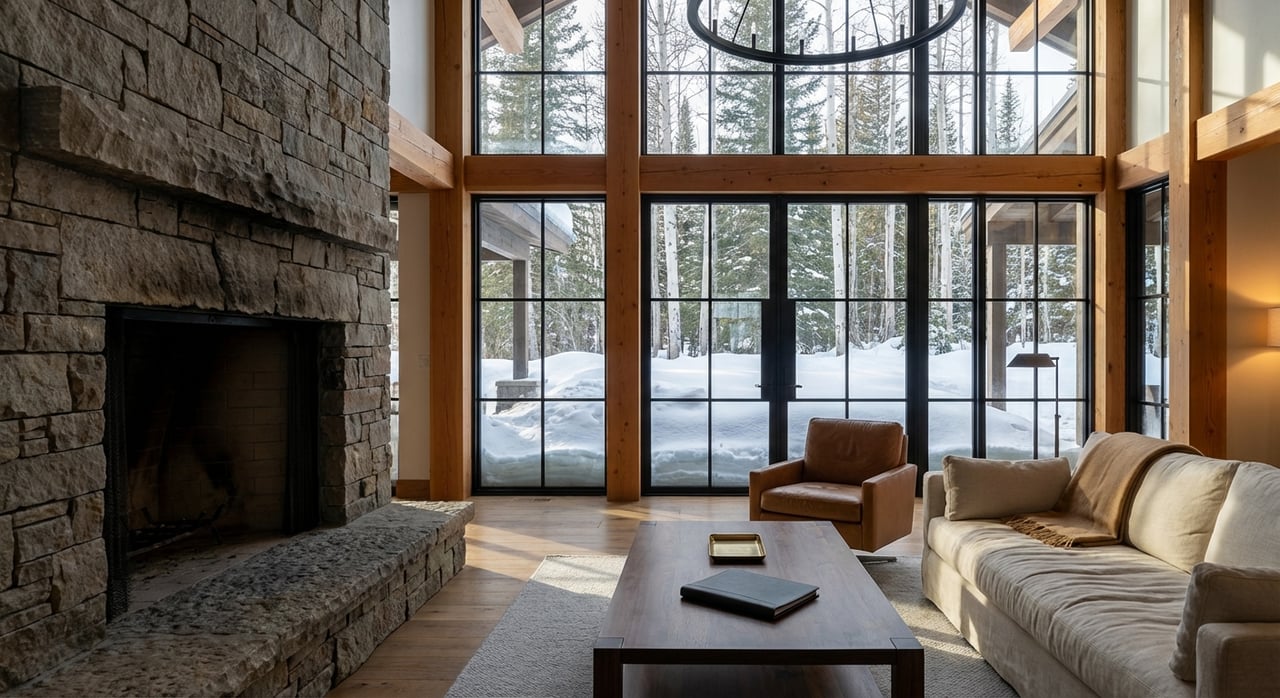
What if the right price for your Red Mountain home is not a single number, but a disciplined plan? In Aspen’s most coveted enclave, a few trophy deals and many quiet sales can skew the data you see online. If you are considering a sale, you need a pricing strategy that recognizes off‑market activity, quantifies view and lot premiums, and preserves your privacy while still discovering true market value. This guide gives you a clear, evidence‑based approach tailored to Red Mountain.
Let’s dive in.
Why Red Mountain pricing is different
Red Mountain concentrates Aspen’s highest prices, where views, privacy, and proximity to town intersect. A small number of ultra‑large, often cash, transactions set headlines and can reset expectations for the entire neighborhood. The $108 million sale at 419 Willoughby Way in April 2024 is a prime example, cited as Colorado’s first residential sale over $100 million and reported as an off‑market deal. You can see local coverage of that record in the Aspen Times report.
Because a handful of trophy sales dominate dollar volume, averages and $ per square foot can look inflated compared with other Aspen areas. Local brokerage recaps, including Sotheby’s Aspen Snowmass Q4 2024 overview, note how the $10 million‑plus segment concentrates activity. That dynamic makes it essential to anchor your pricing to property‑specific drivers and a valuation‑forward plan, not broad citywide stats.
What drives value on Red Mountain
View and sightlines
Uninterrupted panoramas of Aspen Mountain, the valley, and the river carry the greatest premiums. Permanence of view matters as much as the view itself. Appraisers commonly isolate this premium with paired‑sales adjustments, a standard method in valuation practice supported by state appraisal guidance.
Lot position and walkability
Front‑row parcels with flat building sites and easy access to town trade at meaningful premiums. A 2024 vacant lot sale on Pitkin Way near the front row at just under $29 million underscores how scarce, walkable, buildable sites set land‑value baselines for nearby estates.
Privacy, access, and security
Long drives, mature screening, and controlled showings are prized at the top end. Buyers pay to minimize footprint and preserve discretion.
Architectural pedigree and turnkey condition
Recognized architecture and high‑quality, move‑in‑ready finishes widen the buyer pool and reduce friction. In a market with thin inventory, a turnkey experience can be the difference between browsing and writing an offer.
Entitlements and rebuild potential
Rules that cap maximum new‑build size and limit certain features affect the renovate‑versus‑rebuild calculus. Where larger new builds are constrained, existing square footage and buildable lots become relatively more valuable. Local reporting on building features and policy underscores how regulation shapes design choices and costs in Pitkin County; see Aspen Times coverage.
Put numbers to premiums
Use paired‑sales math
When you compare two closely matched properties and change one key variable, like view or lot position, you can calculate a premium as a percentage or as a $ per square foot delta. Appraisers and lenders accept paired‑sales adjustments when supported with clear rationale, photos, and data. Learn more about paired‑sales and adjustment logic in Colorado’s appraisal guidance.
When comps are thin
If you lack perfect matches, present multiple views of value. Show a percentage premium, a $ per square foot comparison, and a narrative explaining permanence of view, lot usability, and recent entitlement changes. Back your case with images, sightline diagrams, and a concise worksheet that can travel from buyer to appraiser.
Renovate, rebuild, or sell as is
On Red Mountain, land value can dominate. If your parcel offers front‑row sightlines, walkability, and a flat building pad, selling as is or focusing on light cosmetic and operational upgrades can outperform a multi‑year luxury remodel. That pattern was clear in 2024 when a front‑row walkable lot commanded a near $29 million price without a house.
When the structure is sound but dated, targeted updates that reduce buyer friction often deliver the highest recognition. Industry benchmarks show curb appeal and focused kitchen or bath improvements tend to recoup more than full upscale replacements. Use the regional tables at Cost vs. Value to prioritize.
A note on build costs: recent Aspen commentary places full luxury build costs broadly in the range of roughly $1,500 to $4,000 per square foot depending on site and finish. That makes replacement math significant, and it is another reason to model outcomes before committing to large capital projects.
Off‑market or public listing?
Many Red Mountain sellers prefer a quiet sale to protect privacy. Office‑exclusive or private campaigns can surface qualified buyers quickly with fewer showings and less publicity. The tradeoff is reduced price discovery. With fewer competing bidders, you risk leaving money on the table if the pool is too narrow.
You also need to follow MLS rules. The National Association of Realtors’ Clear Cooperation policy, and local implementations, require that publicly marketed properties be submitted to the MLS within a set time window. There are documented exceptions, including true office exclusives. For an overview of rule mechanics, review this Clear Cooperation implementation resource.
A valuation‑forward pricing plan
A valuation‑forward strategy centers on evidence, protects confidentiality, and preserves a path to full price discovery.
Step 1: Build a formal valuation package
- Commission an independent appraisal or desktop valuation and a broker analysis.
- Include a one‑page paired‑sales worksheet that isolates view, lot, and condition adjustments with photos and maps.
- Publish a clear price band with low, expected, and high scenarios tied to buyer types.
- Ground your adjustments in accepted methods per state appraisal guidance.
Step 2: Run a private test campaign
- Duration: 2 to 6 weeks is typical.
- Curate an invite list of known, qualified buyers and top cooperating brokers.
- Require NDAs and proof of funds before showings.
- Share a limited digital packet: summary, key photos, floor plans, and valuation rationale.
Step 3: Set predefined pivot criteria
- If you do not meet specific thresholds, pivot to full public marketing.
- Examples: fewer than a target number of vetted showings or no written offers at or above a threshold by a set date.
- This prevents “stealth” pricing drift and documents a good‑faith private test.
Step 4: Prepare for appraisal and underwriting
- If financing is realistic, assemble an appraisal packet in advance.
- Include private sale references, paired‑sales math, entitlement documentation, and a view permanence narrative.
- This reduces the risk of an appraisal gap later.
Step 5: Structure offers to keep tension and privacy
- Consider timed offer reviews or short sealed‑bid windows for selected buyers.
- Use escalation language carefully and document cooperating broker terms to encourage participation.
Pre‑list checklist
- Commission a concise valuation package with an appraisal and paired‑sales worksheet.
- Decide confidentiality level and sign a seller directive that matches local MLS rules on Clear Cooperation.
- Prepare a limited digital asset packet: floor plan, high‑res view images, site plan, and basic disclosures.
- Assemble a proof‑of‑funds checklist and an NDA template for all prospective viewers.
- Confirm cooperating broker compensation and a pivot timeline from private to public marketing.
- Track showings and buyer qualifications during the campaign.
- Recheck the market weekly for new comps and notable lot or estate closings.
- If you trigger a public campaign, have full marketing assets and an appraisal packet ready to support your ask.
Final thoughts
Pricing on Red Mountain rewards discipline. If you quantify view and lot premiums, test your range privately with clear benchmarks, and pivot decisively when needed, you give yourself the best chance to preserve privacy and still capture full market value. If you would like a confidential, valuation‑forward plan tailored to your property, request a conversation with Lex Tarumianz Realty.
FAQs
How do record sales affect my Red Mountain price?
- A few very large, often off‑market, cash deals can raise averages and reset expectations, so you should anchor your ask to property‑specific drivers and paired‑sales analysis rather than neighborhood averages.
What is the best way to show a view premium to buyers?
- Use paired‑sales math with photos, sightline diagrams, and a short worksheet that calculates either a percentage or $ per square foot delta, supported by accepted appraisal methods.
Should I renovate before selling a dated Red Mountain home?
- Compare fully loaded costs against likely uplift; targeted curb‑appeal and light kitchen or bath updates often see better recognition than full luxury replacements, per Cost vs. Value benchmarks.
Can I sell privately without hurting my outcome?
- Sometimes yes, but private exposure reduces price discovery, so set clear pivot criteria to a public campaign if offers do not meet your thresholds within a defined window.
What MLS rules apply if I test off‑market first?
- Clear Cooperation rules require MLS submission once you publicly market, with exceptions for documented office exclusives; confirm local implementation before you begin any outreach.